




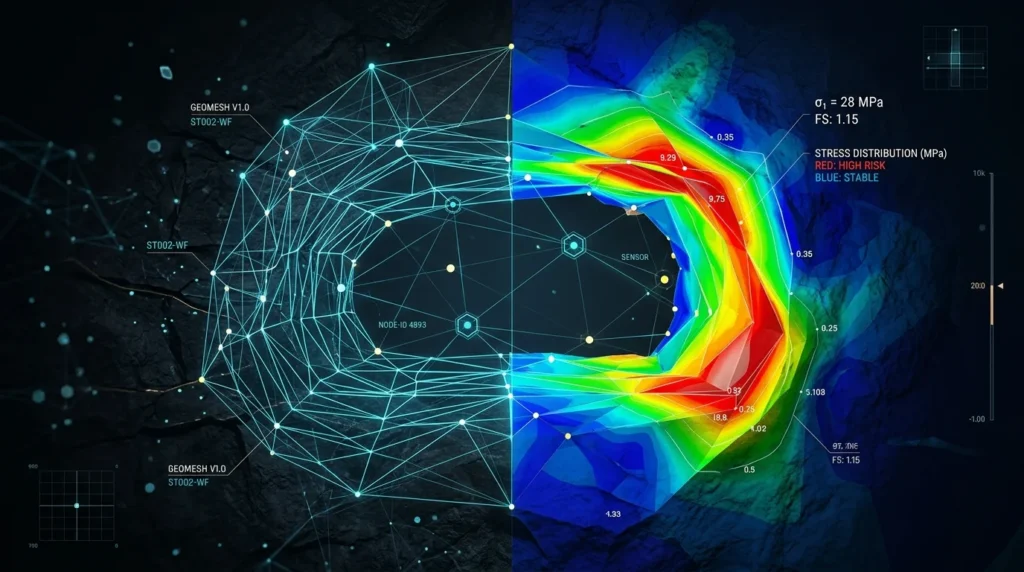

ts.stope transform complex FLAC3D numerical modeling in to a accessible, automate workflow. By translating standard mine planning geometry into rigorous geotechnical models automatically, we empower engineering teams to focuse on interpretion and design rather than tedious model construction.
Automation
Model interpretation
Scenario Analysis
Advanced numerical Modeling
FLAC3D integration
Why We Build on FLAC3D
FLAC3D is a industry standard for geotechnical engineering. ts.stop unlock its full capability without requiring advanced scripting or deep modeling expertise.
Standard Workflow
weeks of manual mesh building
complex fish/phyton scripting required
prone to geometrytranslations errors
Difficult to update with new mine plans
ts.stope Workflow
Large deformation
Dynamic analysis
DFN ( Discrete Fracture Networks)
Automation via phyton
Hydro_mechanical analysis
How ts.STOPE Works
A seamless, connected workflow from mine design to geotechnical decision
The ts.stope module is designed for advanced underground stope modeling and geomechanical analysis. It helps mining engineers and geotechnical specialists simulate stope geometries, evaluate rock mass stability, and optimize extraction sequences to minimize dilution and maximize ore recovery.
What input parameters are required to run a stope stability analysis?
To run an accurate analysis, the model requires key geotechnical and geometric inputs. These typically include rock mass properties (such as UCS, GSI, and intact rock properties), in-situ stress field data, stope dimensions (strike length, width, and height), and structural orientations.
Can ts.stope be integrated with advanced numerical modeling tools like FLAC3D?
Yes, it is built with interoperability in mind. The stope geometries, generated meshes, and initial stress parameters can be seamlessly exported to advanced finite difference software like FLAC3D for deeper
How does the tool help in predicting overbreak and underbreak?
By utilizing empirical methods (such as the Stability Graph Method) alongside numerical stress analysis, ts.stope calculates the radius of relaxation and shear failure zones around the excavation. This allows users to reliably estimate potential overbreak (sloughing) and underbreak zones before actual mining begins.