
Navigating ESG Compliance in Australian Mining: Sustainable Strategies for 2026 and Beyond
In 2026, Environmental, Social, and Governance (ESG) criteria are no longer optional benchmarks for the Australian mining sector; they are fundamental prerequisites for securing capital, regulatory approvals, and a social license to operate. As stakeholders demand greater transparency, mining companies face the complex challenge of aligning high-yield production with stringent environmental stewardship.
The Evolution of Tailings and Water Management
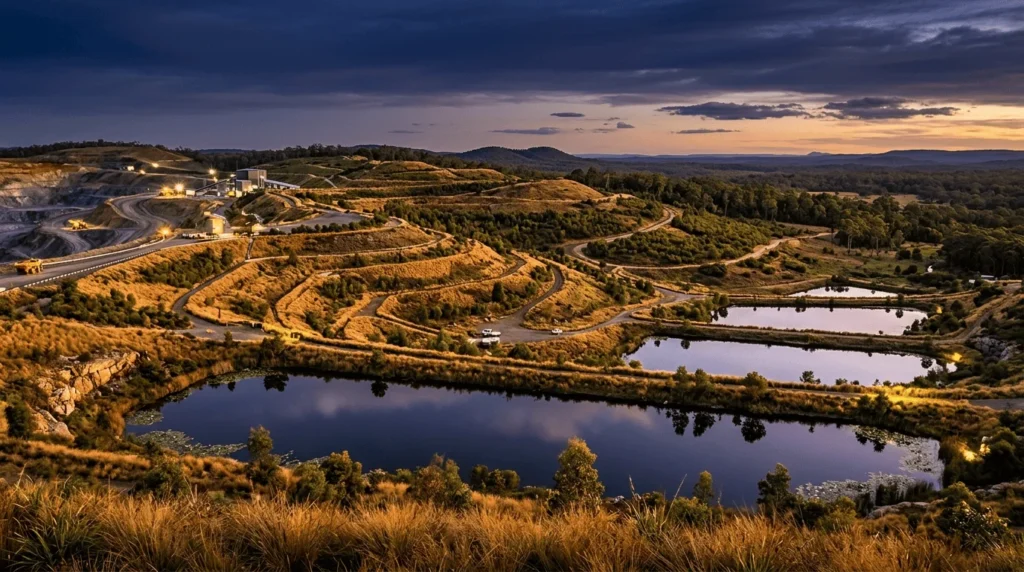
One of the most critical aspects of environmental compliance is the management of Tailings Storage Facilities (TSFs) and groundwater resources. Modern regulations require a shift from reactive monitoring to proactive, predictive management. Advanced geospatial tracking and hydrogeological modeling allow operators to predict seepage and prevent contamination before it occurs.
Furthermore, efficient water management strategies, such as closed-loop processing circuits and advanced dewatering techniques, are drastically reducing the freshwater footprint of modern open-pit and underground operations.
Proactive Mine Rehabilitation
Progressive mine rehabilitation is a cornerstone of sustainable mining. Instead of waiting for the end of the mine’s life (LOM), progressive capping, topsoil redistribution, and native flora re-establishment must be integrated into the daily operational schedule. This not only minimizes long-term environmental liabilities but also significantly reduces final closure costs.
The TerraSolve Advantage
At TerraSolve, we understand that true sustainability integrates seamlessly with operational efficiency. Our engineering teams specialize in developing customized ESG strategies, from optimized tailings management designs to comprehensive mine closure planning. We bridge the gap between strict regulatory compliance and practical mine engineering.